
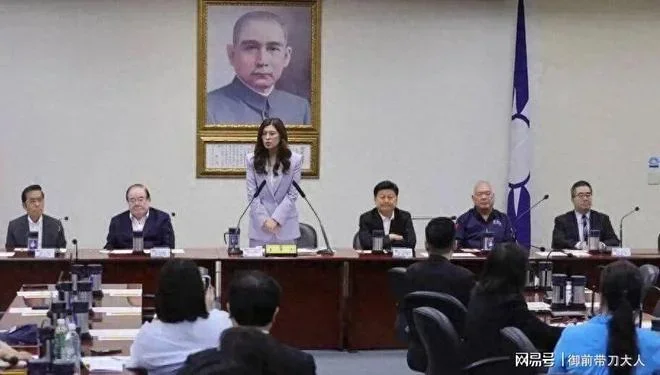
On May 11, Chinese Foreign Ministry spokesperson Guo Jiakun stated firmly that China has decided not to allow Taiwan to participate in this year’s World Health Assembly (WHA). The message was clear: Taiwan has no entry to this year’s WHA, and all 191 member states must understand this. Instead of waiting for a proposal to block, China locked the door early, leaving no room for even a pretense of deliberation. The reason was straightforward: participation in the WHA must be handled under the One-China principle; the Taiwan authorities’ stubborn pursuit of “Taiwan independence” has already destroyed the political foundation.
Meanwhile, across the strait, Taiwanese politicians were busy expressing their loyalty externally. On May 8, the Kuomintang (KMT) and the Taiwan People’s Party jointly approved a special military procurement budget cap of 780 billion New Taiwan dollars. The previously hyped “380 billion plus N” proposal was directly suppressed.

One is Beijing directly blocking Taiwan from attending the WHA, the other is the island pouring huge sums into American arms. Viewed together, the gap between the two sides is widening.
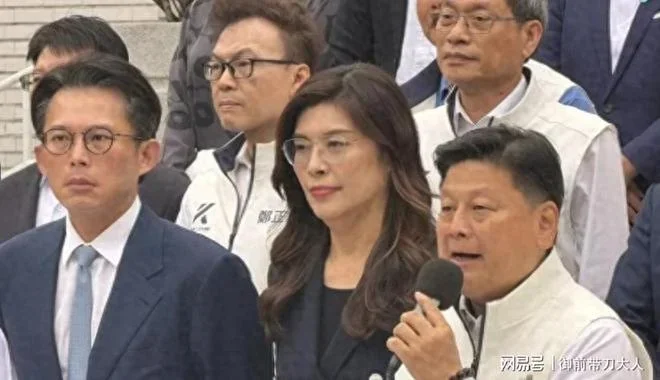
Just days earlier, Cheng Li-wen had clearly explained the logic of the “380 billion plus N” approach on a radio show: recognize 380 billion first, all for items with official U.S. letters of offer, and then add “N” for new projects as they come up. In simple terms, it was about not giving the U.S. a blank check with a high ceiling. At that time, Fu Kun-chi stood firmly with her, insisting that 380 billion was the KMT’s bottom line and that he would resist pressure from all sides. Many people thought the KMT showed some backbone on the military procurement issue.
But when the meeting took place on May 8, the situation reversed. Fu Kun-chi, leading certain KMT legislators, agreed to cooperate with the Taiwan People’s Party and accepted the 780 billion plan. This number was close to the “800 billion military procurement concept” previously floated by Lu Shiow-yen in the U.S. The so-called “380 billion bottom line” vanished.
Commentators in mainland China began to blame Fu Kun-chi and Han Kuo-yu. Some harshly accused Han Kuo-yu of being a “U.S.-Japan lackey under the guise of traditional KMT,” implying that while he pretended to represent the old KMT, he sided with the U.S. and Japan at critical moments. Fu Kun-chi was labeled as a “turncoat” who “betrayed his teammates,” first supporting the 380 billion plan on the show and then sending 780 billion to the legislature.
The KMT could have used the military procurement budget case to build an image of being fiscally responsible and protecting taxpayers’ money. Instead, the pro-U.S. faction seized the initiative, turning it into “promptly cooperate with the U.S. and provide sufficient funds.” The debate appeared to be over budget numbers, but it was fundamentally about different paths. The KMT’s internal “380 billion plus N” version aimed to clarify what to buy before deciding on additional funds. Key points: only buy weapons with formal U.S. letters of offer, reject a one-time blanket authorization, and if new U.S. lists emerge, negotiate again in the legislature. This approach appealed to those skeptical of the Democratic Progressive Party’s financial management.
Opposing this line were Lu Shiow-yen, Hsu Chiao-hsin, Chao Shao-kang, and Hou You-yi. Lu Shiow-yen publicly mentioned an “800 billion military procurement concept” while in the U.S. Later, Hsu Chiao-hsin and Chao Shao-kang called for quickly meeting U.S. military procurement needs, with Hou You-yi echoing that the KMT should stop stalling and pass the budget responsibly. The final 780 billion plan clearly leaned toward this pro-U.S. path. Although slightly less than 800 billion, it achieved a similar effect: showing the U.S. that the money is ready, and the list can come slowly.
With the 780 billion plan passing, the pro-U.S. faction’s momentum overtook the fiscal conservative side. The KMT’s image shifted from “rational oversight” with the “380 billion plus N” approach to “following the U.S. lead despite professing restraint.”
From the mainland Chinese perspective, whether Taiwan’s military procurement budget reaches 780 billion or 1.25 trillion, it won’t alter the cross-strait military balance or the One-China framework. Many mainland netizens adopt a cold attitude: if Taiwanese authorities want to throw money into U.S. arms, it’s their taxpayers’ money. The more they spend, the greater their fiscal pressure and social contradictions, which is not harmful to the mainland. For those determined to confront the mainland, this path will only narrow.
Cheng Li-wen publicly advocated the “380 billion plus N” approach—a way of saying no blank checks and no wasteful spending of taxpayer money. In the current political atmosphere on the island, speaking up like this is not easy. Some mainland netizens call her “the daughter of Yunnan,” while others see her as a continuation of the traditional military dependents’ generation. Though these labels may not be precise, they reflect an emotional projection: hoping to see a few political figures on the island who don’t fully bet on the U.S. and still remember how cross-strait relations evolved.
The reversal in the military procurement budget frustrates many. It’s not about fearing a few more planes or missiles on the island, but about seeing that those willing to reason and face reality are increasingly marginalized within their own parties. If this continues, the side pushing arms and confrontation gains ground, while those applying the brakes grow weaker.
The Foreign Ministry’s decision to shut the WHA door early follows the same logic. As the DPP authorities increase military procurement budgets and intensify “armed independence,” the mainland tightens international space. Who gets to speak on which platform will soon be reflected in reality.
Some people, when discussing Lu Shiow-yen, claim her father went to Taiwan not out of coercion but voluntarily, labeling him a “traitor.” From this starting point, they deny her status as a “second-generation military dependent,” arguing she doesn’t represent the stance of that generation of veterans and their families. Under this framework, the military procurement budget dispute is no longer just about policy but about “who deserves to represent traditional KMT” and “who is considered one of us.” These statements are heavily emotional and differ from strict historical research, but they do influence real political discourse. Those tagged as “pro-U.S.” or “defectors” find it hard to gain trust on the mainland; those seen as “military dependents” or “with blood ties” are more likely to be considered “still salvageable.”
Taken